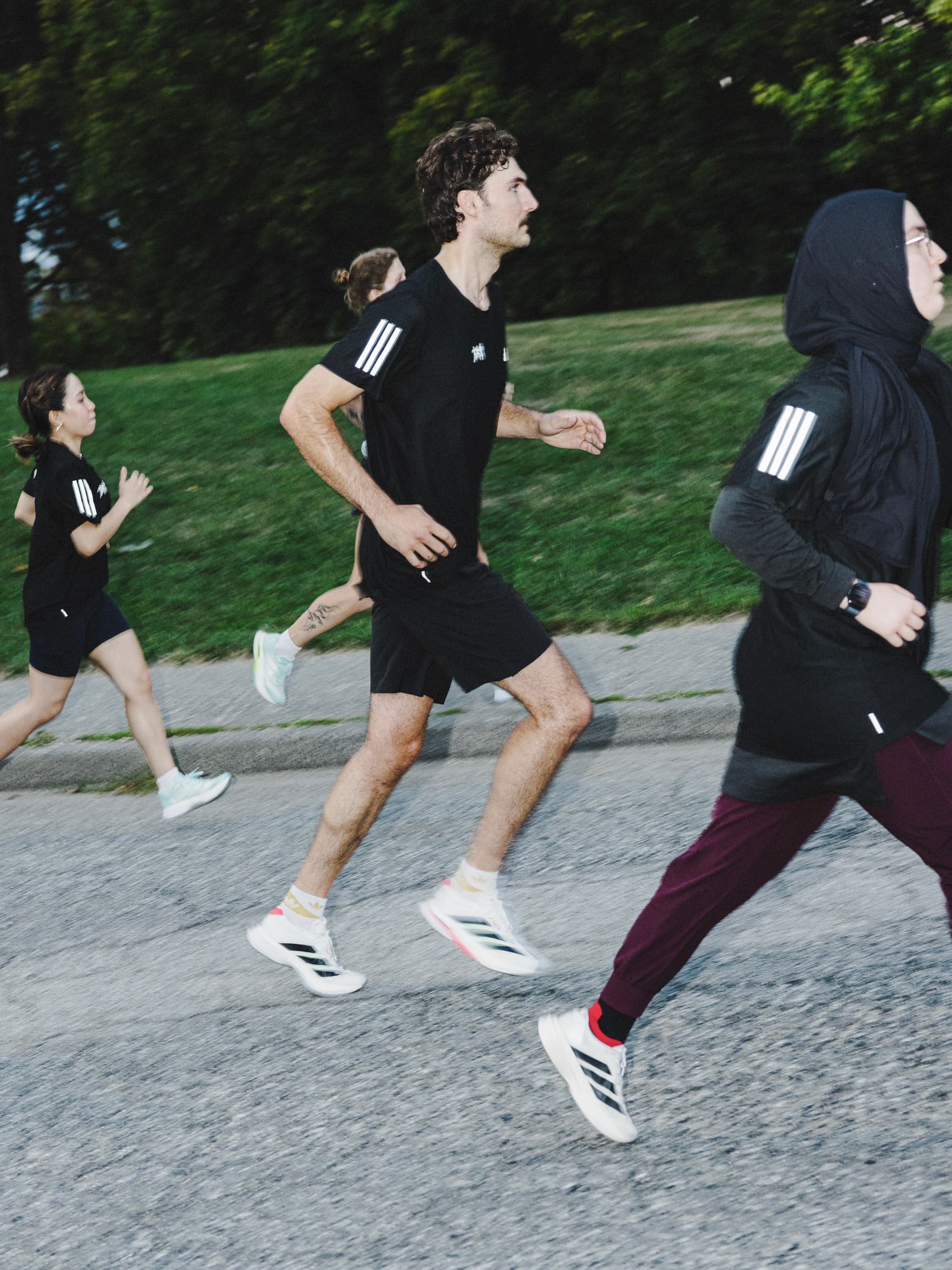
 Ehren Chang
Maybe you’ve added a few runs, maybe you’ve looked up a plan, maybe you’ve told yourself this is the time you’re finally going to stay consistent.
That’s usually how it starts.
And to be fair, it works for a bit. The first few runs feel fine. You feel fresh, motivated, and ready to train. Shorter runs feel manageable, your legs feel decent, and it’s easy to assume your body is ready for more.
Then something starts to shift.
A bit of tightness shows up in one calf. Your breathing feels heavier earlier than expected. Your legs feel more sluggish halfway through a run that normally wouldn’t feel that difficult. One side starts doing a little more work than the other, even if you can’t fully explain it yet.
It’s usually not pain. It just feels... off. Most runners assume they just need to keep training, so they keep going.
The issue is that what’s changing isn’t just conditioning.
Where your stride starts to change (even when you feel fine)
Before adding more running, it helps to understand what fatigue actually changes once runs start getting longer.
While running mechanics can get complicated quickly, most of what happens during a run can generally be understood through “Absorb” and “Bounce.”
Absorb describes the phase where the body accepts force during landing. Bounce describes the phase where the body releases that force to help propel us into the next step.
During landing and push-off, different parts of the body take on different jobs. During absorb, the hips, knees, and ankles bend to help handle impact. During bounce, those same joints extend to help push the body forward.
Through coordination and timing, the body repeats this cycle from one leg to the other over and over again throughout a run.
This is why runners may start noticing things like:
Legs feeling heavier or more sluggish
Cadence slows slightly
Legs feel heavier earlier
One calf starts tightening sooner
Stride feels less smooth late in the run
Effort feels higher even when pace hasn’t changed much
That shift usually doesn’t feel dramatic at first. It often shows up subtly before runners fully recognize what’s changing.
The body’s ability to Absorb force gets challenged more as fatigue builds
As runners fatigue, the body has to work harder to handle impact during landing, especially through the knees and ankles later in runs.
It becomes harder to efficiently transfer force from landing into push-off
As stiffness and coordination start changing, runners spend longer on the ground and lose some efficiency moving into the next stride.
How small imbalances turn into real load
Early in the season, it’s common for runners to get overexcited and increase training too quickly. The shorter runs feel manageable, energy is high, and it’s easy to assume the body is ready for more.
The problem is that fatigue often starts accumulating before runners fully notice how much their mechanics are changing underneath.
As fatigue builds, the body has to work harder to absorb force while also maintaining coordination and timing from one step to the next. Once that starts breaking down, the body compensates by shifting work somewhere else.
A slight change in landing mechanics can become extra load through the calf. Less control at the hip can change how force moves through the knee and ankle. A slower push-off can keep runners on the ground longer with every step.
Over time, those smaller changes get repeated thousands of times. That’s why something that feels minor on Monday can suddenly show up in every run by the end of the week.
Running usually doesn’t create these patterns out of nowhere. It tends to expose and repeat what’s already happening underneath.
What To Check Before You Add More Distance
Now that we know what fatigue changes during running, what should runners actually do about it?
Early in race training, it’s common to increase running too quickly because the shorter runs still feel manageable. The problem is that fatigue usually starts affecting movement before runners fully recognize it.
Before increasing training too aggressively, it helps to focus on more than just running itself.
Improve your ability to Absorb and return force outside of just running
Strength and flexibility work can help improve how the body handles impact and maintains movement quality as fatigue builds. The specific exercises that help most will depend on what each runner needs individually.
Pay attention to technique changes earlier in runs
Small shifts in cadence, landing, push-off, or side-to-side loading are often early signs that fatigue is starting to change mechanics. Early runs are often the best time to refine running technique before fatigue becomes more noticeable later on.
Develop better body awareness while you run
The sooner runners recognize compensation patterns and movement changes, the easier it becomes to adjust before those patterns become more consistent. Paying attention to things like muscle tension, weight shifting, or changes in footstrike can help runners notice problems earlier.
It’s also worth paying attention to how footwear feels throughout a run, not just during the first few kilometres. The same shoe can feel stable early and unpredictable later depending on how the body is responding to fatigue that day.
That’s also why simply adding more running isn’t always the answer, especially early in race training when fatigue starts exposing movement changes runners usually don’t notice at the start of runs.

Many runners assume they need a completely different training plan once things start feeling harder.
Most of the time, that’s not actually the issue.
The bigger problem is usually that fatigue starts changing movement before runners fully recognize it. One side starts taking more load, certain muscles start working harder, or mechanics begin shifting later in runs as the body tries to compensate.
That’s why things like strength work, running technique, footwear, and body awareness can matter just as much as the training itself, especially once distance and fatigue start increasing week after week.
The goal isn’t just to complete runs.
It’s to understand how your body responds as training gets longer, more repetitive, and more physically demanding.
The Checkpoint
So you signed up for a race. What should your next steps actually look like?
Pay attention to what changes once runs get longer. Heavy legs, slower cadence, muscle tension, or one side working harder than the other are often early signs that fatigue is starting to affect mechanics.
As fatigue builds, the body has to work harder to absorb impact and efficiently move from landing into push-off.
That’s why things like strength work, running technique, footwear, and body awareness can matter just as much as the running itself, especially as training gets longer and more repetitive.
The sooner runners recognize movement changes, the easier it becomes to adjust before those patterns become more consistent.
Written By
Ehren Chang
Ehren is a physiotherapist at RunReady with a background in kinesiology, strength and conditioning, and running movement analysis. He works with runners to better understand how their body responds to training load and fatigue.